Netanyahu Directs IDF and Mossad to Overthrow Iran’s Regime
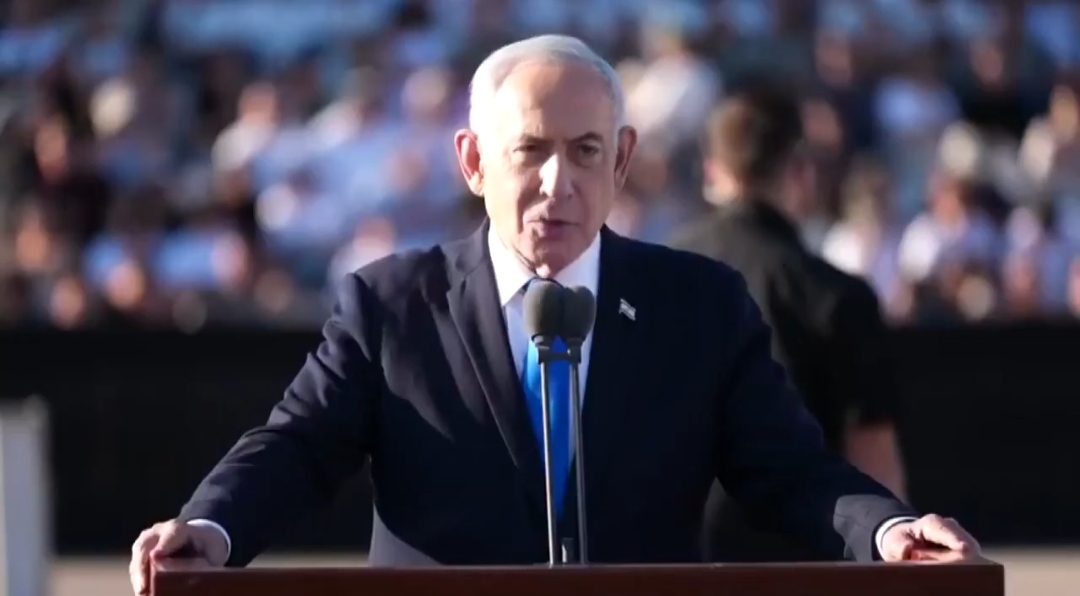
Israeli Prime Minister Benjamin Netanyahu has declared that he has directed the Israel Defense Forces (IDF), the Mossad intelligence agency and other security bodies to work toward overthrowing Iran’s government. The statement, made on October 21, 2026, signals an escalation in Israel’s publicly stated objectives toward Tehran. Speaking at a graduation ceremony for Israeli military officer cadets, Netanyahu argued that removing Iran’s current leadership was the only way to eliminate what he described as a long-term threat to Israel. His remarks were reported by Israeli media outlets, including The Jerusalem Post and Ynet.
During his address, Netanyahu accused Iran’s Supreme Leader Mojtaba Khamenei of continuing the nuclear policies associated with his father, Ali Khamenei. The Israeli prime minister claimed that Iran was once again attempting to develop nuclear weapons and warned that such ambitions posed an existential threat to Israel. These statements represent the Israeli government’s assessment of Iran’s intentions; the allegations should not be treated as independently established solely on the basis of Netanyahu’s speech. The remarks nevertheless underline how concerns over Iran’s nuclear programme remain central to Israel’s security policy.
Netanyahu’s directive specifically named the IDF, Mossad and Israel’s wider security establishment. The IDF is responsible for Israel’s military operations, while Mossad conducts foreign intelligence and related national security activities. However, Netanyahu did not publicly provide a timetable, operational details or a precise explanation of how the stated objective of regime change would be pursued. His announcement therefore establishes the government’s declared objective, but it does not by itself confirm that a new military operation has been approved or that Iran’s leadership is close to falling.
The announcement comes amid reports that Israel has been considering renewed military action against Iran. According to reporting by The Jerusalem Post and other outlets, plans for possible strikes have been discussed amid continuing disagreements over Iran’s nuclear activities and the wider regional security situation. Separate reporting has indicated that US President Donald Trump opposed an earlier proposal for renewed Israeli strikes. The precise status of any proposed operation remains unclear, and the reported preparation of military plans should not be confused with confirmation that an attack has been ordered.
Netanyahu also claimed that Trump shared his view that changing Iran’s government was necessary to remove the threat. He referred to a recent conversation with the American president and presented the two countries as prepared to continue working together. However, Netanyahu’s account of Trump’s position should be distinguished from an independently confirmed US policy decision. Washington’s support for Israel’s security does not, on its own, establish that the United States has formally adopted regime change as an operational objective or approved a new campaign against Iran.
Israeli Defence Minister Israel Katz also issued a warning to Tehran during the military ceremony, saying Israel would respond forcefully if Iran attacked. Katz alleged that Iran and its regional partners could attempt actions intended to influence Israel’s upcoming election, although the public remarks did not establish that a specific attack was imminent. The statements from both Israeli leaders demonstrate the growing overlap between security concerns, military preparedness and domestic political debate as Israel approaches its October 27 election. The military ceremony itself was not broadcast live following legal concerns about political messaging during the election period.
The prospect of an effort to overthrow Iran’s government carries consequences beyond the two countries. Any renewed military confrontation could increase instability across the Middle East, place neighbouring countries under pressure and affect international energy markets and shipping routes. Iran also has regional partners and armed groups that could become involved in a wider confrontation. Nevertheless, the scale and likelihood of any escalation remain uncertain, and Netanyahu’s announcement alone does not establish that a broader regional conflict will occur. Diplomatic developments and decisions by Israel, Iran and the United States will be important in determining what happens next.
For now, the central development is Netanyahu’s explicit declaration that overthrowing Iran’s regime is an objective he has assigned to Israel’s military and intelligence services. His government has framed the policy around preventing Iran from acquiring nuclear weapons and protecting Israeli security, while the allegations about Iran’s renewed nuclear ambitions remain contested claims requiring independent assessment. No timetable for regime change was announced, and the public statement did not confirm that a new attack had begun. The announcement nevertheless marks a significant escalation in Israel’s declared position and raises fresh questions about the future of diplomacy, military action and regional stability.