NSUI Activists Burn Effigy Featuring Modi, Shah and Other Prominent Figures in Delhi
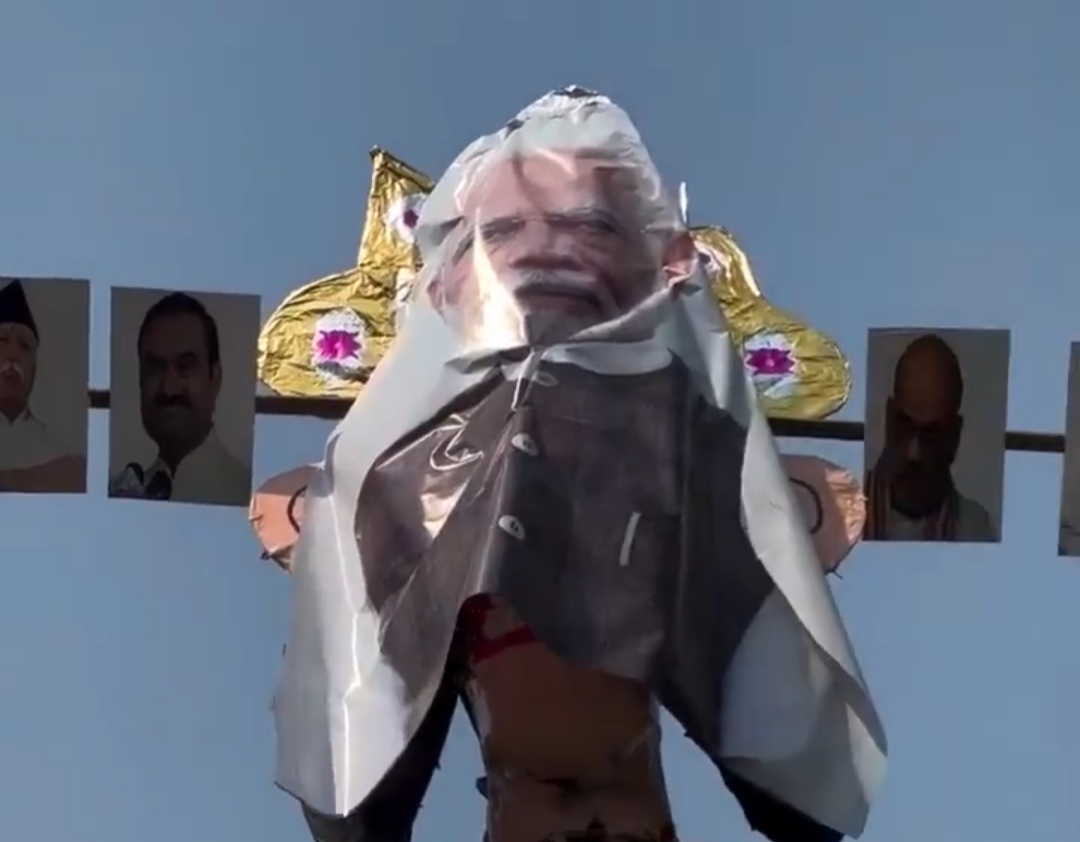
National Students’ Union of India (NSUI) activists marked Dussehra in New Delhi by burning an effigy featuring the faces of Prime Minister Narendra Modi, Union Home Minister Amit Shah, Rashtriya Swayamsevak Sangh (RSS) chief Mohan Bhagwat, Chief Election Commissioner Gyanesh Kumar, Uttar Pradesh Chief Minister Yogi Adityanath and industrialists Mukesh Ambani and Gautam Adani. The symbolic act drew attention because of the prominent political and business figures represented on the effigy.
The protest took place during Dussehra, a Hindu festival that symbolises the victory of good over evil. Burning effigies is a traditional feature of the celebrations, but political groups sometimes use the occasion to express opposition to leaders, government policies or institutions. By including the faces of prominent public figures, the activists used the symbolism of the festival to communicate their political message.
The individuals represented on the effigy hold influential positions in India's political, administrative, religious and business spheres. Narendra Modi leads the central government, Amit Shah oversees the Union Home Ministry, Mohan Bhagwat heads the RSS, and Gyanesh Kumar serves as the Chief Election Commissioner. Yogi Adityanath is the chief minister of Uttar Pradesh, while Mukesh Ambani and Gautam Adani lead major business groups in India.
The inclusion of these figures reflects the protesters' decision to direct their demonstration at individuals associated with different centres of power. However, the act of burning an effigy is a form of political expression and does not, by itself, establish the validity of any allegations against the people depicted. The specific demands and accusations made by the activists would need to be assessed separately.
The demonstration also highlights how festivals and public gatherings can become platforms for political messaging in India. Political parties and affiliated organisations frequently use symbolic protests, slogans, posters and demonstrations to draw public attention to their concerns. Such actions can generate debate about the limits of political criticism and the role of public protest in a democratic society.
Dussehra celebrations traditionally focus on the victory of Lord Rama over Ravana, representing the triumph of righteousness over wrongdoing. Political protesters sometimes reinterpret this symbolism to criticise people or institutions they believe are acting against public interests. In this case, the faces displayed on the effigy gave the demonstration a distinctly political character.
The incident comes amid continuing political debates over governance, electoral institutions and the relationship between political power and major business interests. However, the presence of several public figures on a single effigy should not be interpreted as evidence of a common offence or wrongdoing. Any specific allegations require independent verification and a response from the parties concerned.
The demonstration underscores the continuing use of symbolic protest in India's political landscape, particularly during major public occasions. While the act may intensify political debate, understanding the controversy requires examining the activists' stated reasons, the wider political context and independently verified facts. Further details about the organisers' specific demands and the circumstances surrounding the demonstration would help establish the full context of the event.